Strange Kin, 2025
Philips Exeter Academy with Jennifer Angus, Catherine Chalmers, Ruth Marsh, and Kate Kato
https://exeter.edu/lamont-gallery/strange-kin/
For well over a century, the rivalry between Phillips Exeter Academy and Phillips Academy Andover has been shaped not only by athletic competition, but the informal cultural life of both schools—rooted not only in athletic competition but also in academic rigor, the rivalry has endured through fleeting gestures, symbolic exchanges, and playful disruptions. In 2006, that rivalry took the form of a prank when Andover students released approximately 300 live crickets into Exeter’s Class of 1945 Library on the eve of the annual E/A weekend. The insects made their way into both main areas and crevices of the building, filling various floors with noise that echoed throughout the building and requiring staff and students to vacuum up the remains over several days. Unlike previous years—when dyed mice made an appearance—Exeter had no major response, save for a few subtle gestures: stickers swapped onto Andover signage, stolen merchandise, and the kind of small, untraceable acts that define the culture of rivalry as much as the official record does.
The artist, Britt Ransom, graduated high school in 2005, just a year before the prank occurred—not as an Exeter student, but as someone in the same generational orbit. A prankster herself, Ransom approaches the incident with a sense of familiarity, recognizing the humor, timing, and social charge embedded in such a gesture. This proximity offers a personal point of access to the story—not from within the institution, but adjacent to it, viewing the prank not only as a humorous disruption, but as a generational imprint. Her artistic practice centers on the relationships between humans, animals, and environments, often explored through digitally fabricated sculptures and installations. Working across scales, she examines how small, often unnoticed organisms or actions reshape the systems they inhabit—whether architectural, ecological, or social.
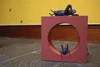
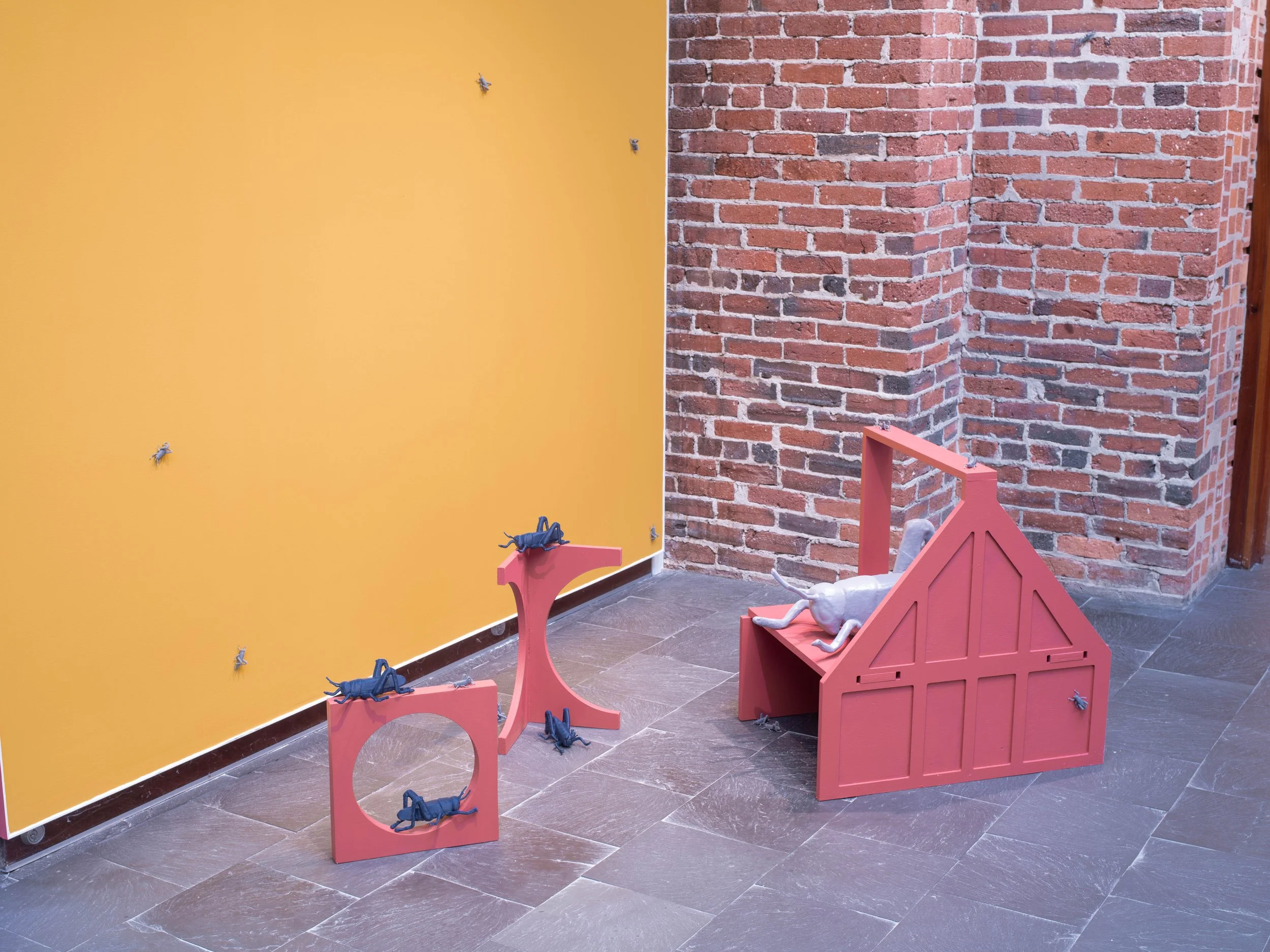
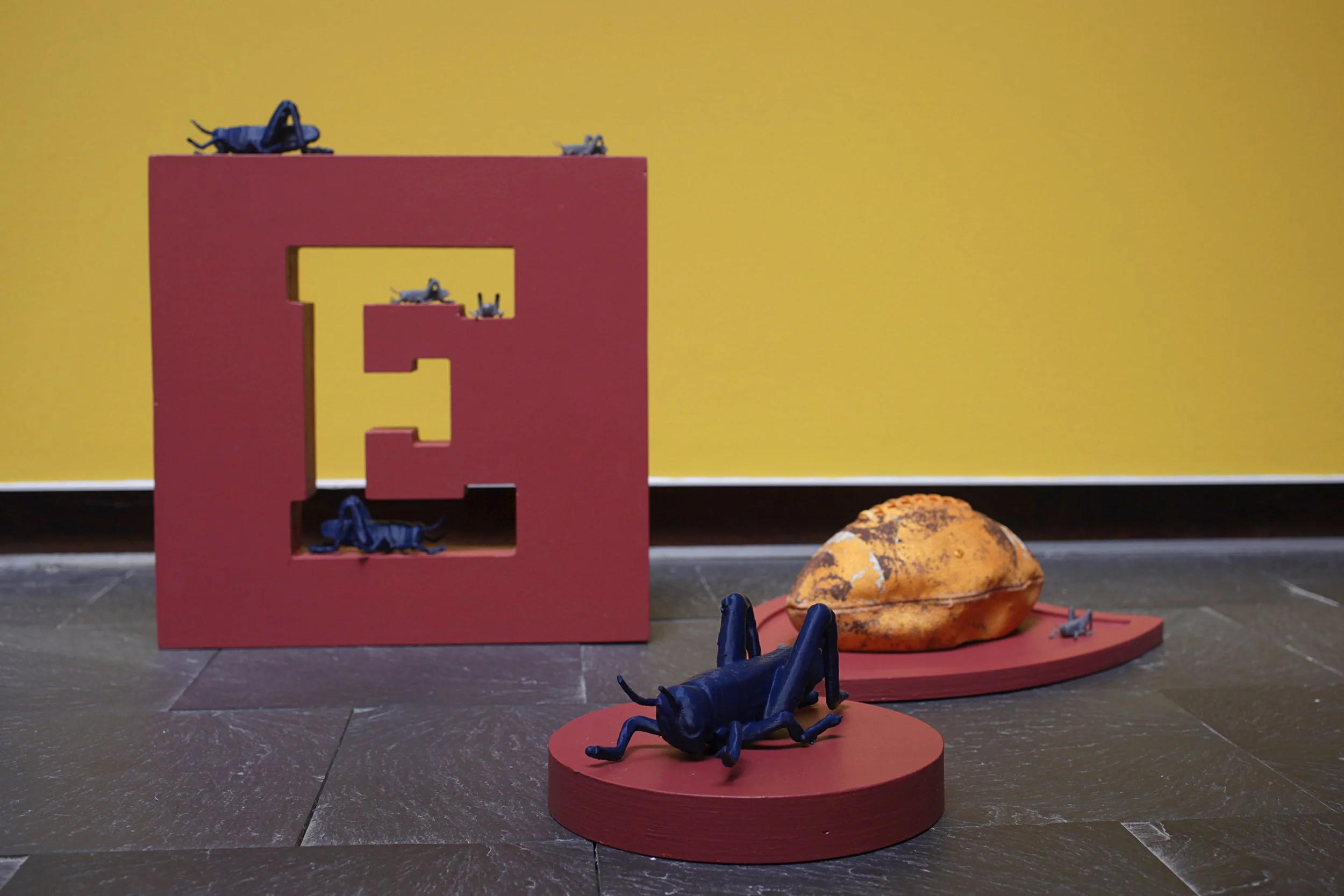
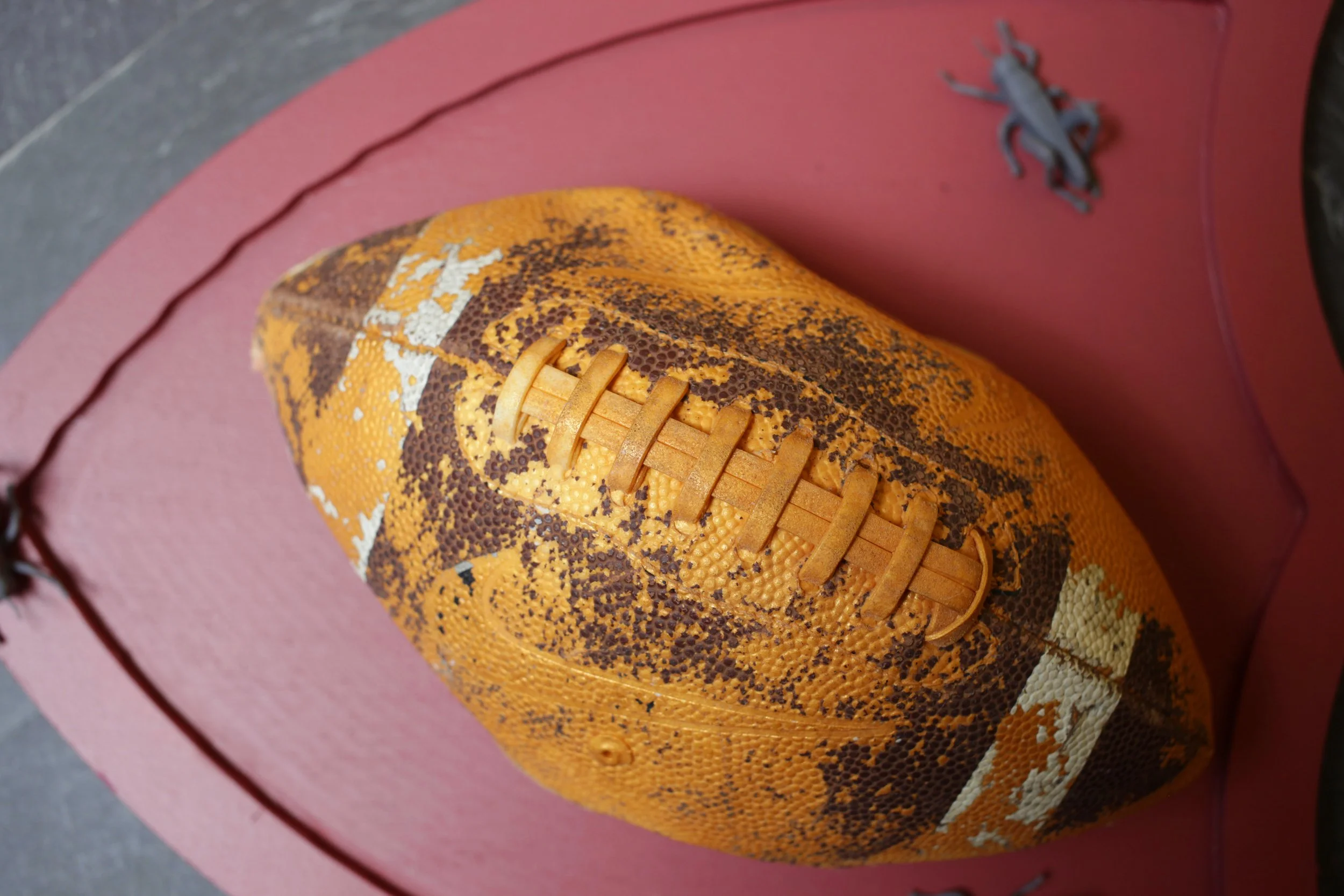
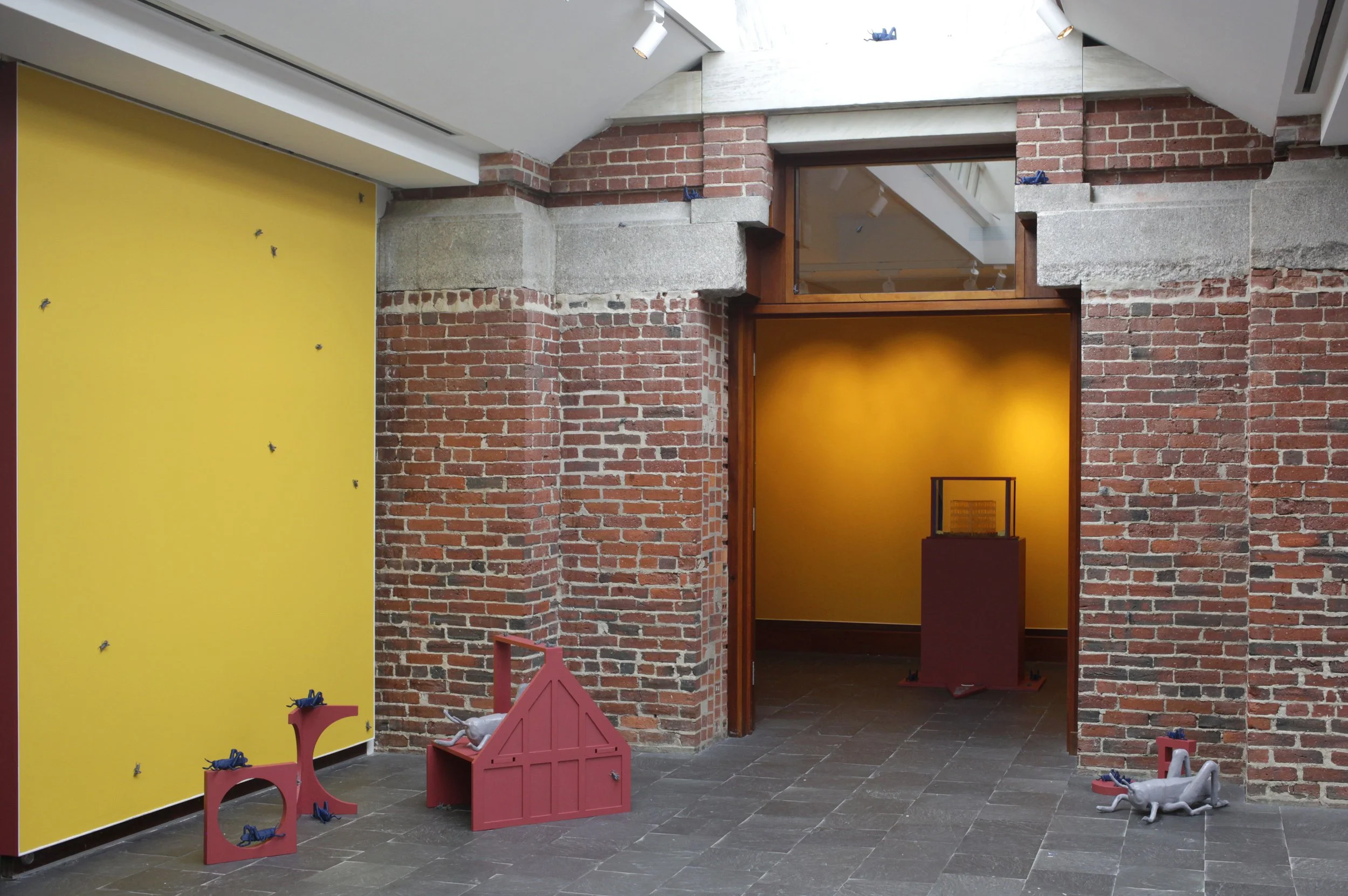
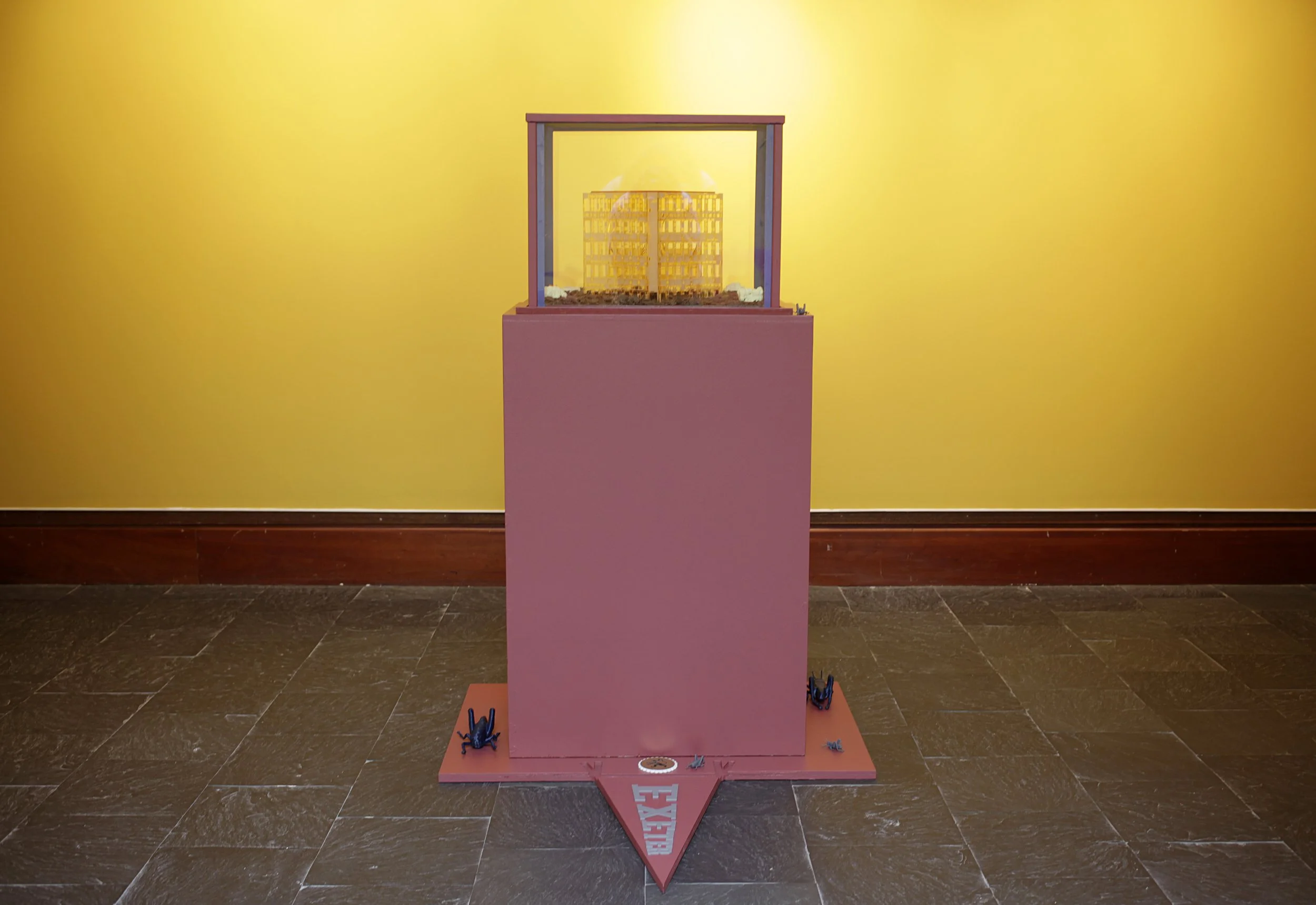
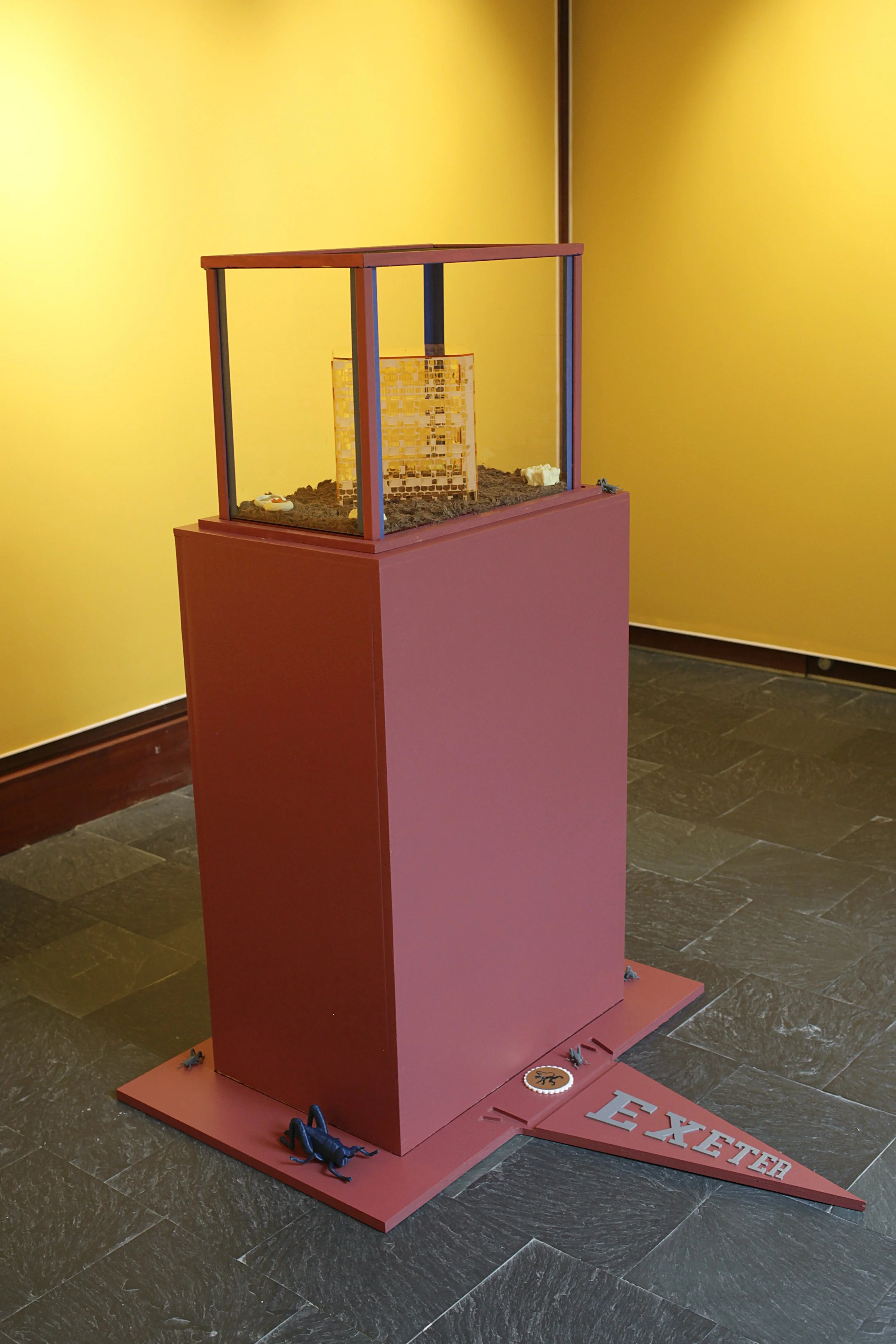
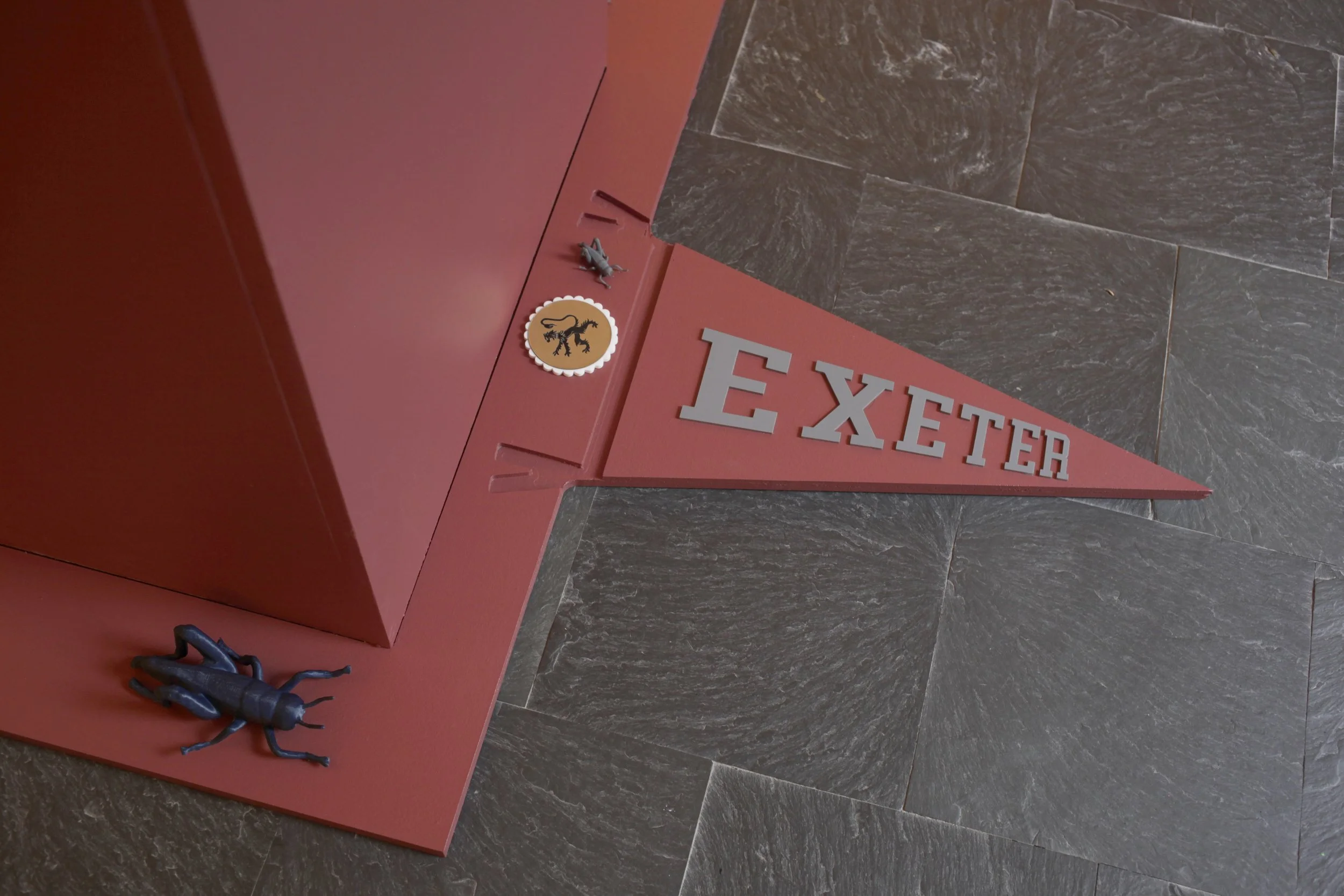
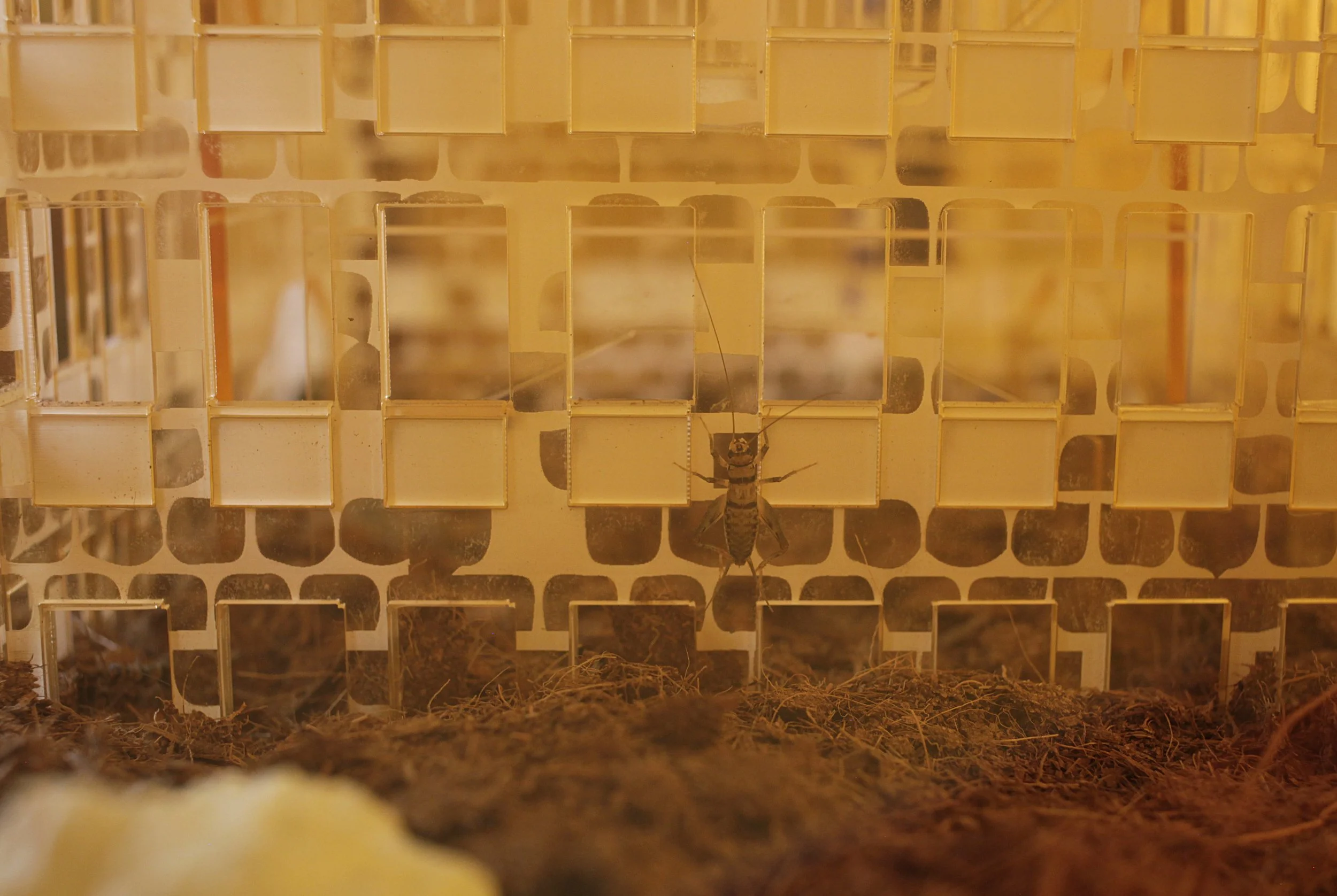
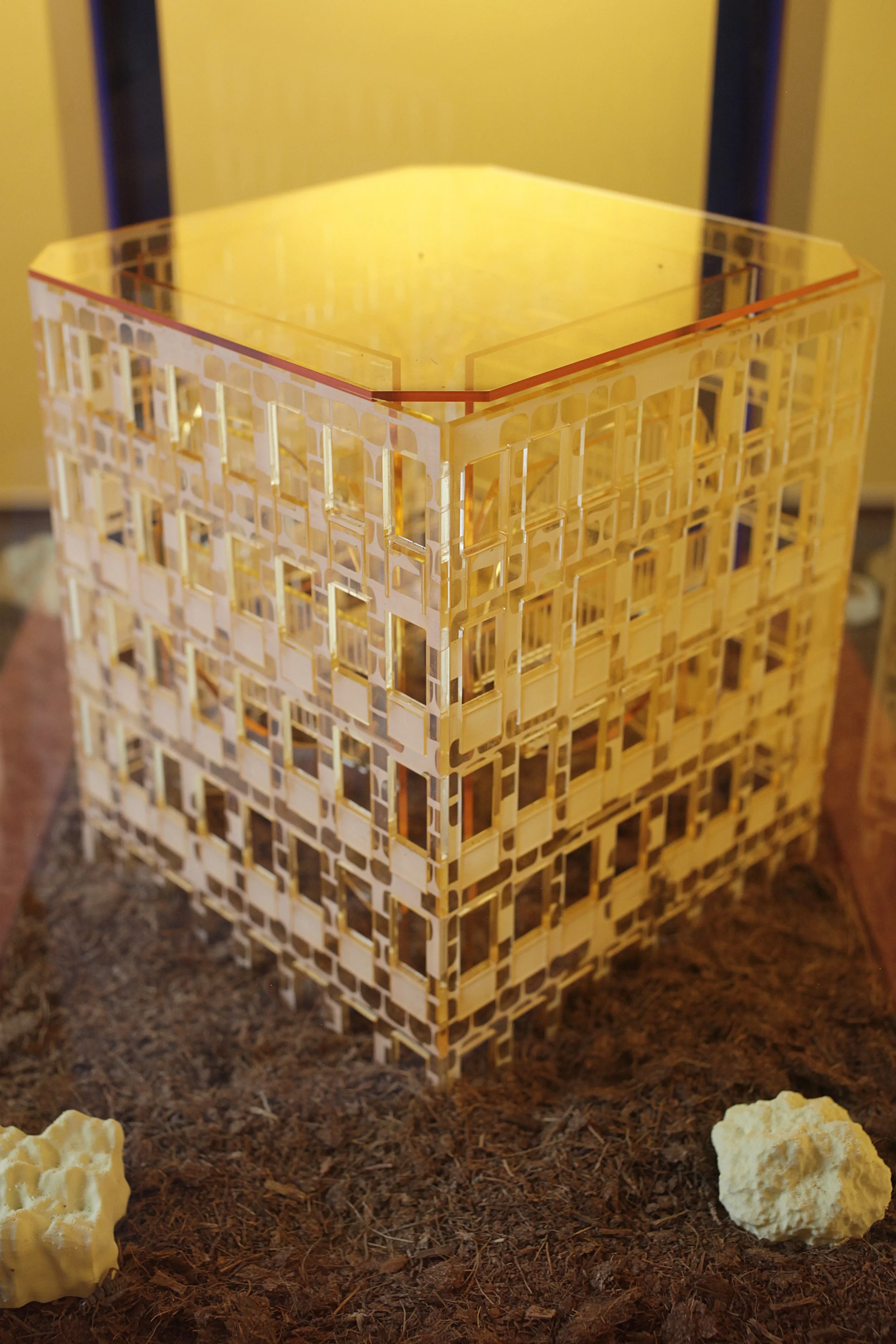
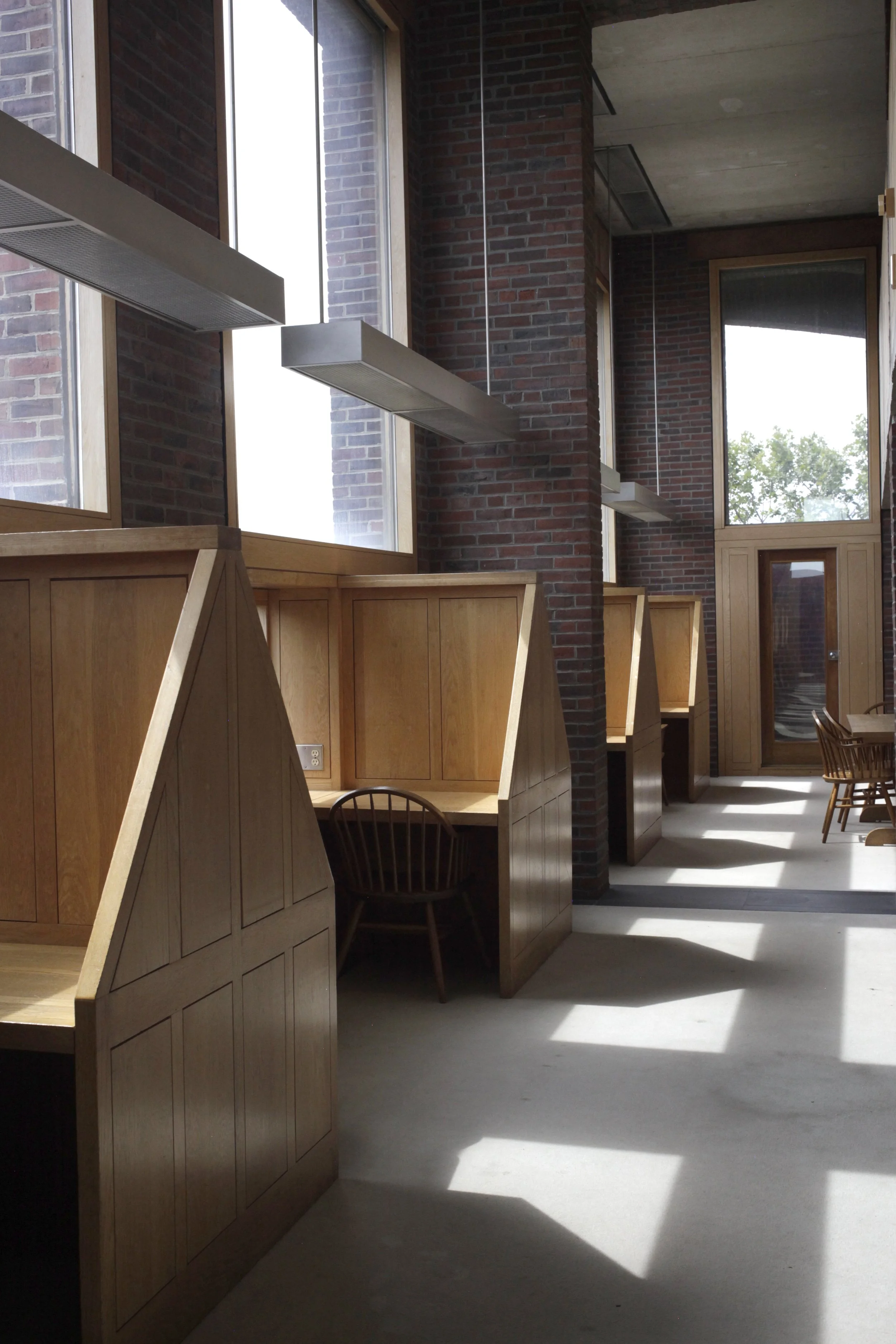
At the center of her work within the exhibition is a reduced reimagining of Louis Kahn’s Class of 1945 Library—not as a static icon, but as a living site open to occupation and interference, not for humans, but for insects. A sculpture features a clear acrylic enclosure housing live crickets and a scale model of the Kahn library in which they lived, fabricated in gray acrylic to echo one of Exeter’s school colors. Inside, simplified Kahn-inspired architectural forms—arches, voids, stepped platforms—create an inhabitable terrain for the crickets. The enclosure sits on a wooden pedestal engraved with a reference to the building’s signature brick pattern and is elevated atop a platform shaped like a pendant flag, a well recognized symbol of school spirit. Visual and material symbols of school spirit—shapes resembling flags, crests, school colors, and other emblems—are woven into the sculptures throughout the exhibition, drawing on the graphic language of rivalry to explore how identity is shaped, performed, and contested within institutional space.
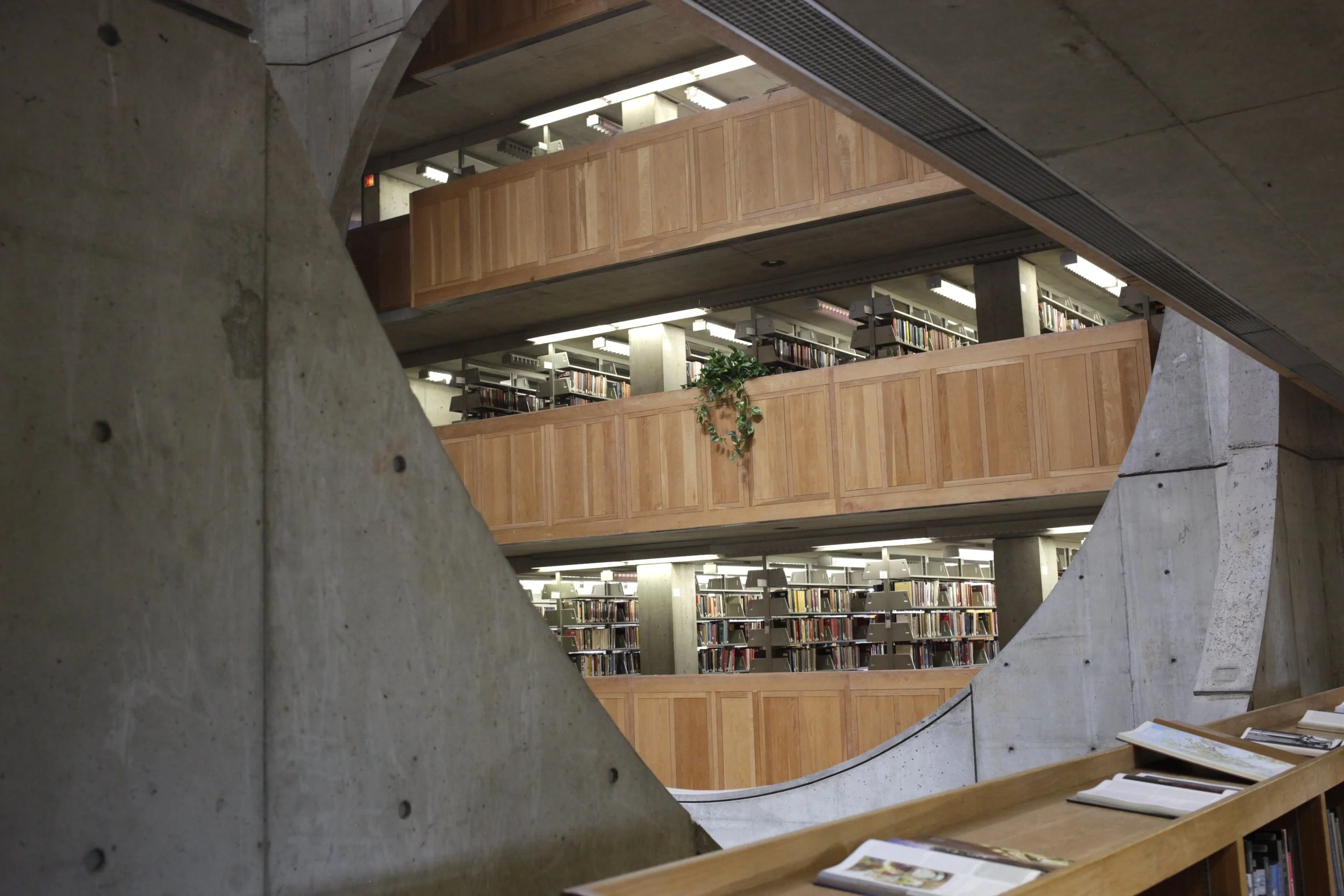
Kahn’s library is widely recognized as a masterpiece of modern architecture: a rigorous, reverent space of inward focus, defined by its monumental geometry and central light-filled void. Designed to elevate contemplation, it embodies order, silence, and permanence. Introducing crickets into a scaled model of the building reimagined by the artist—living, ephemeral, and sonically unruly—into this space reopens it to interruption. The work does not desecrate the building’s legacy; rather, it reveals the porousness of even the carefully composed environments.
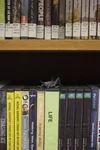
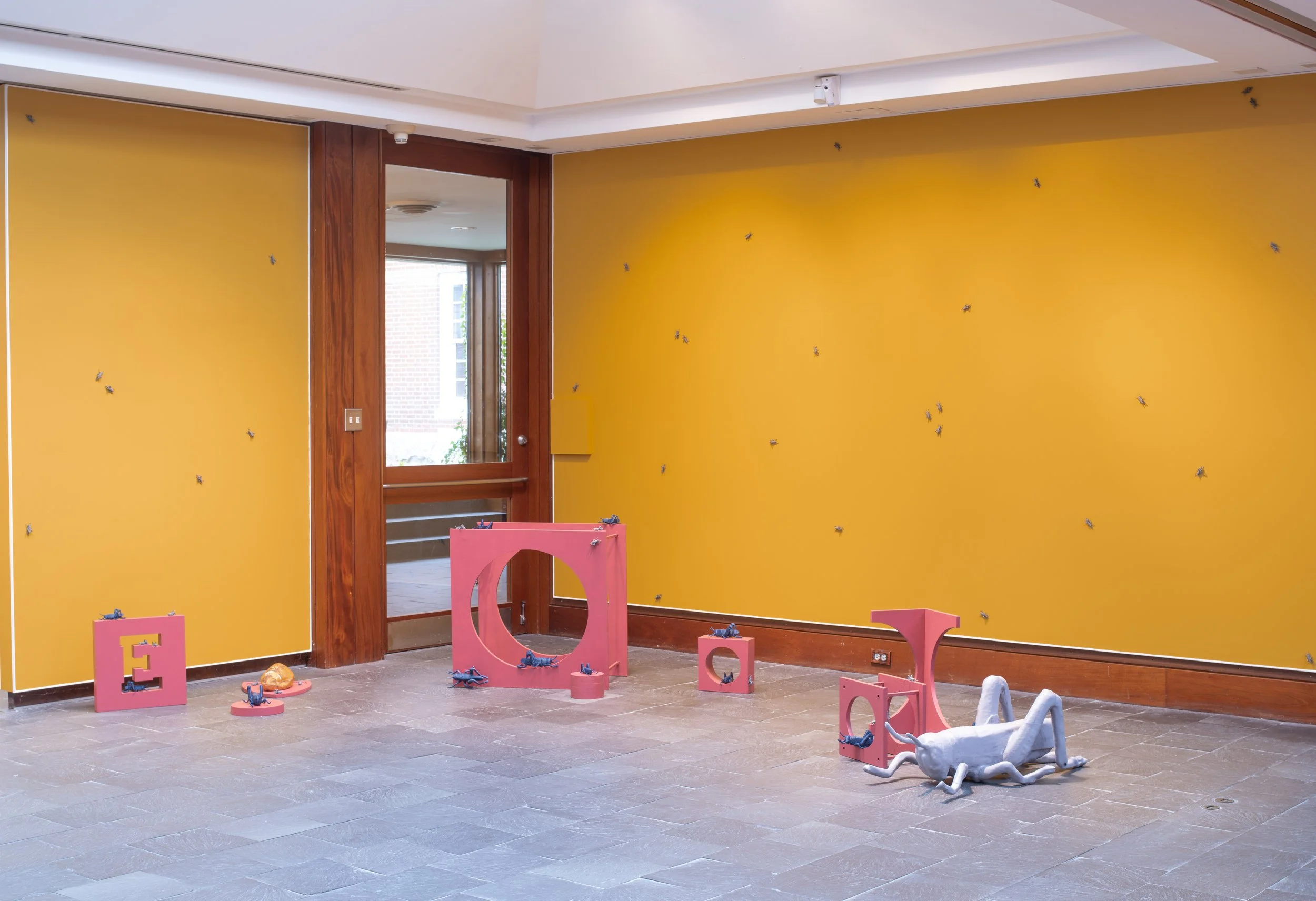
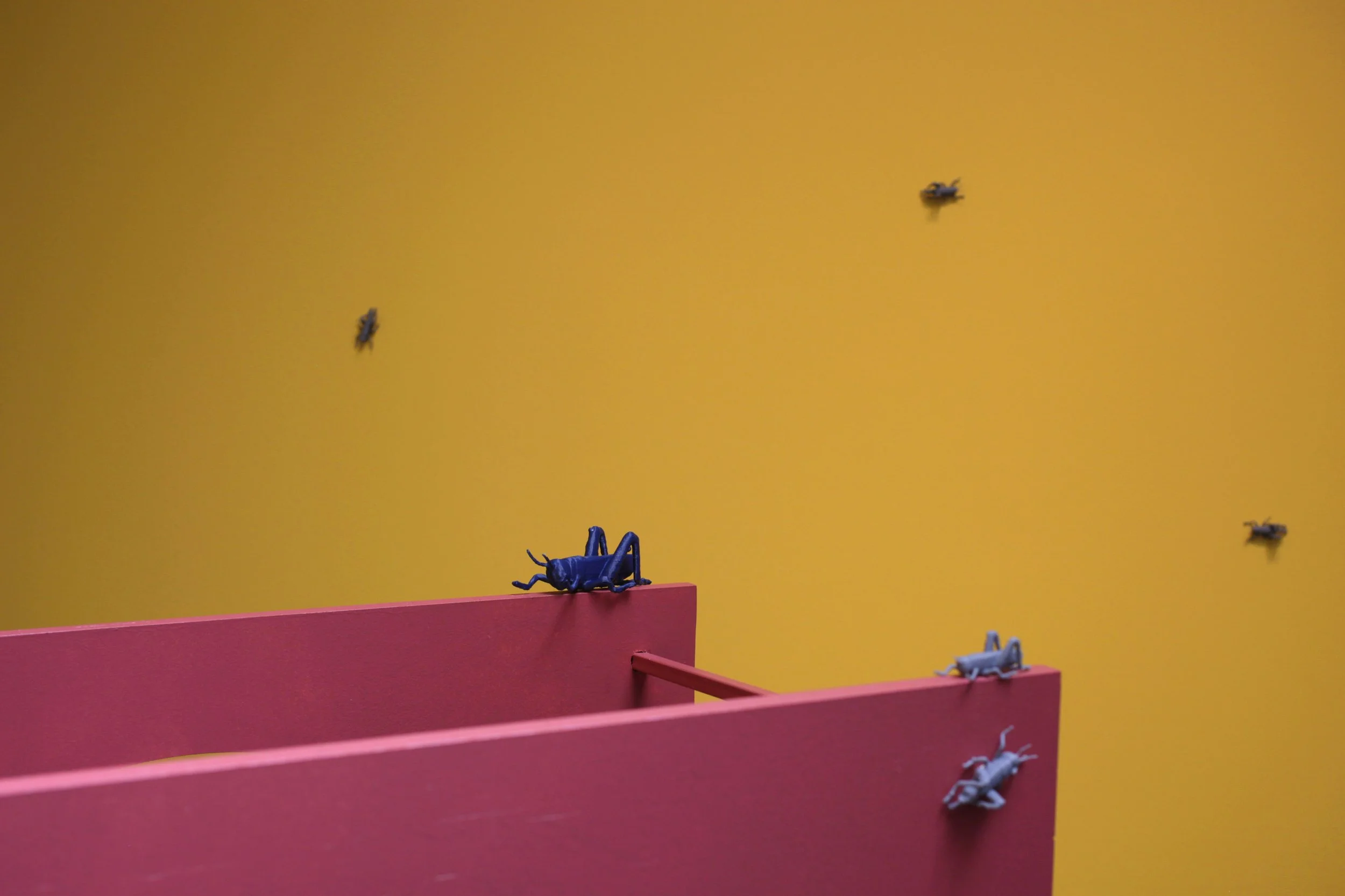
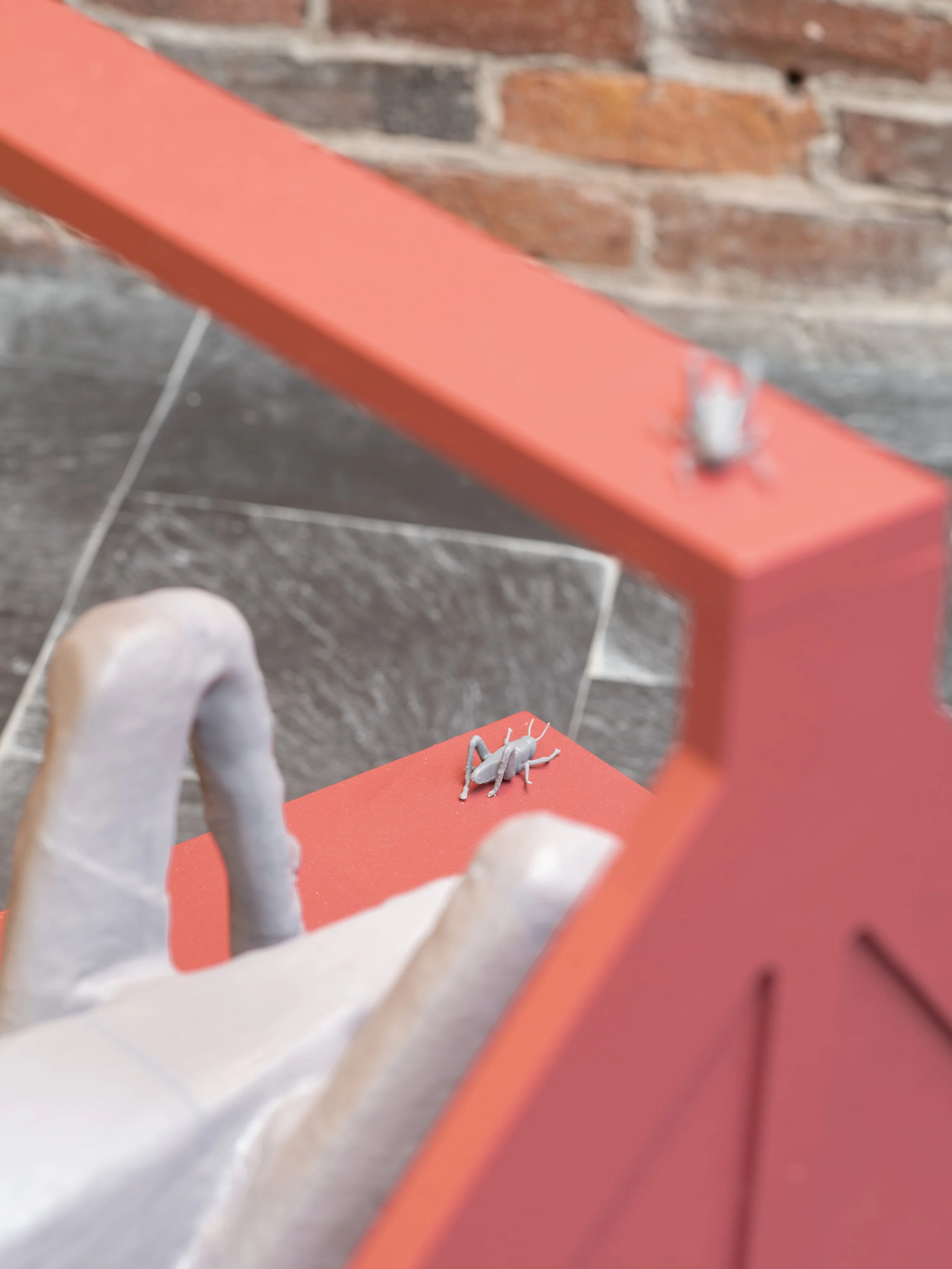
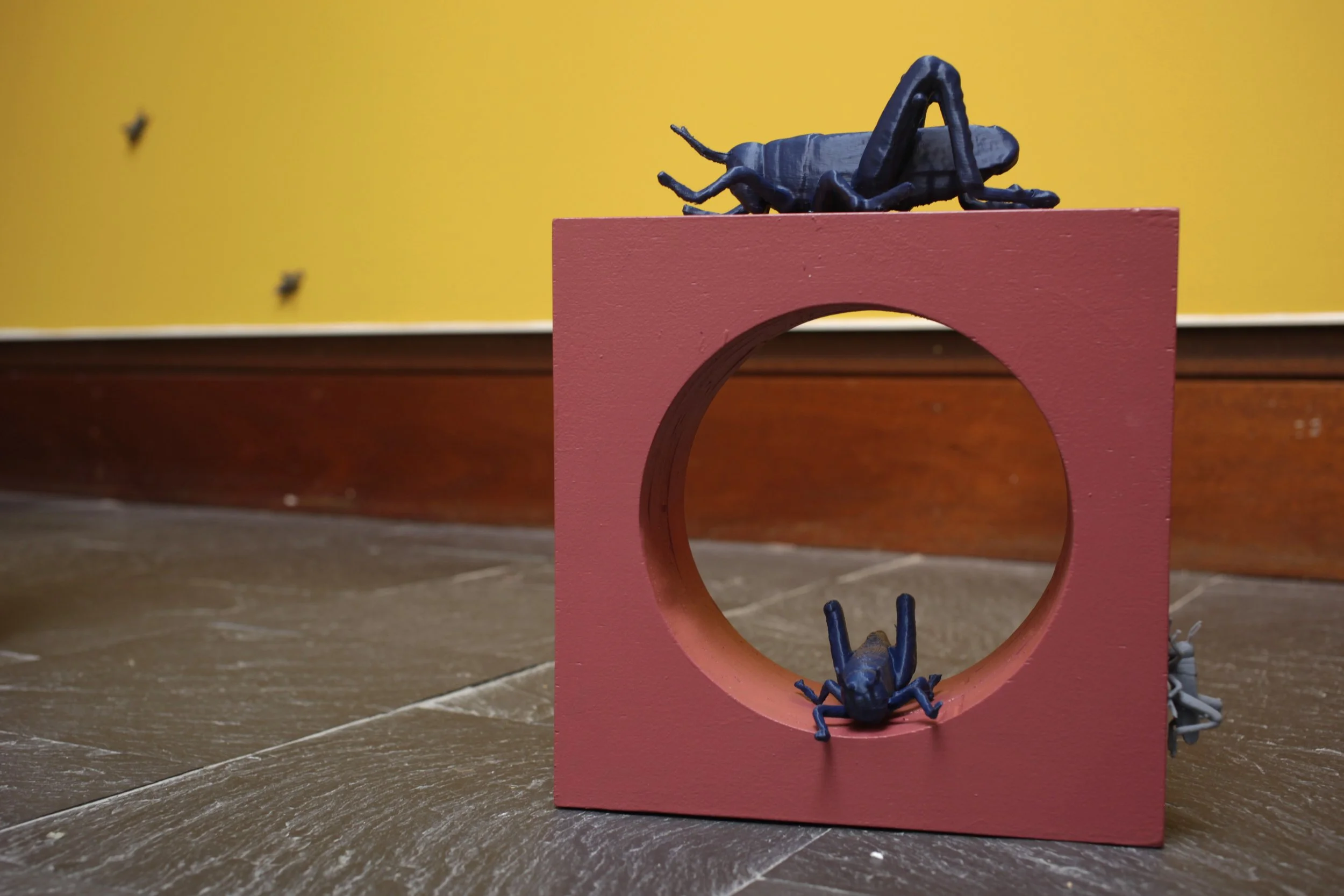
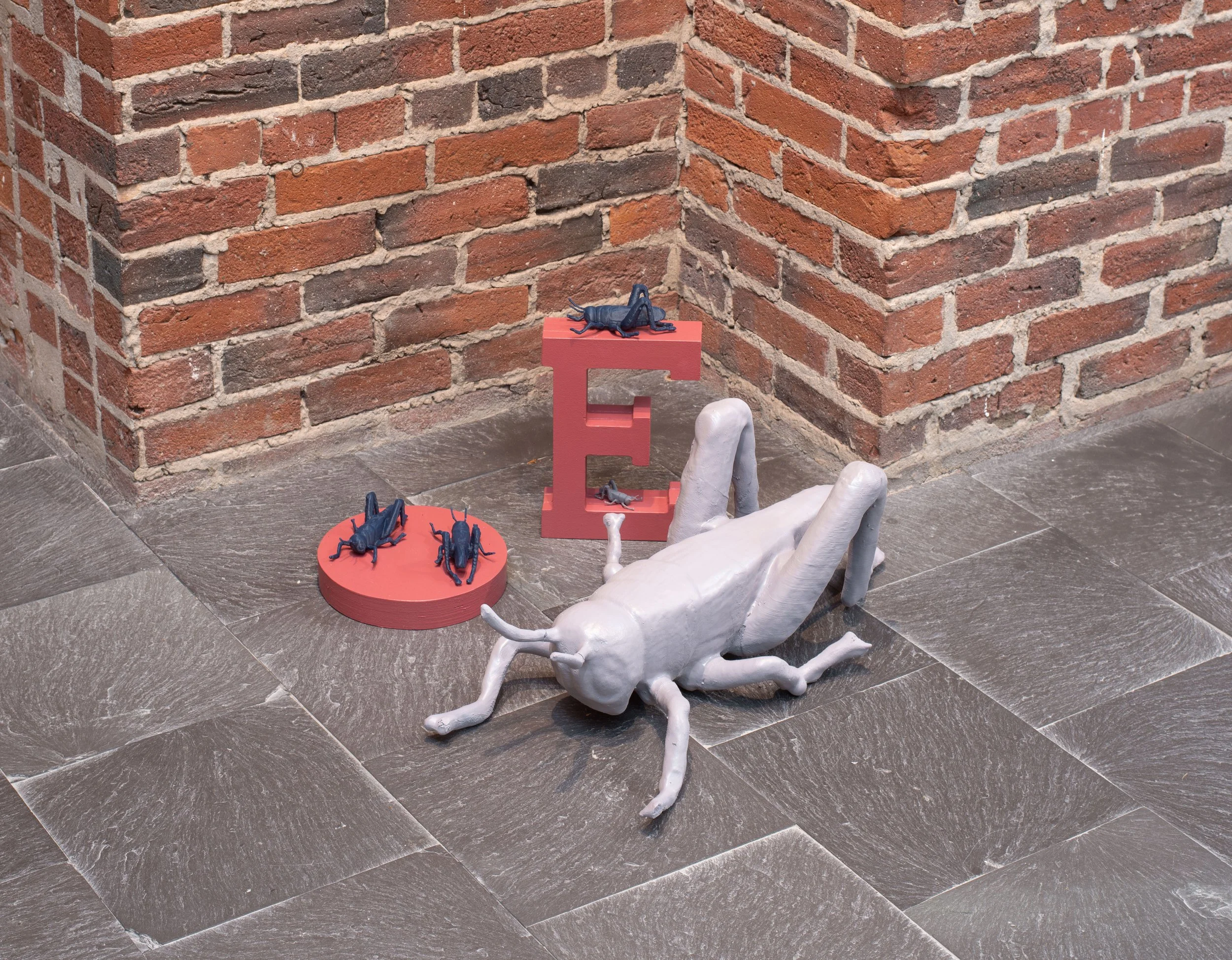
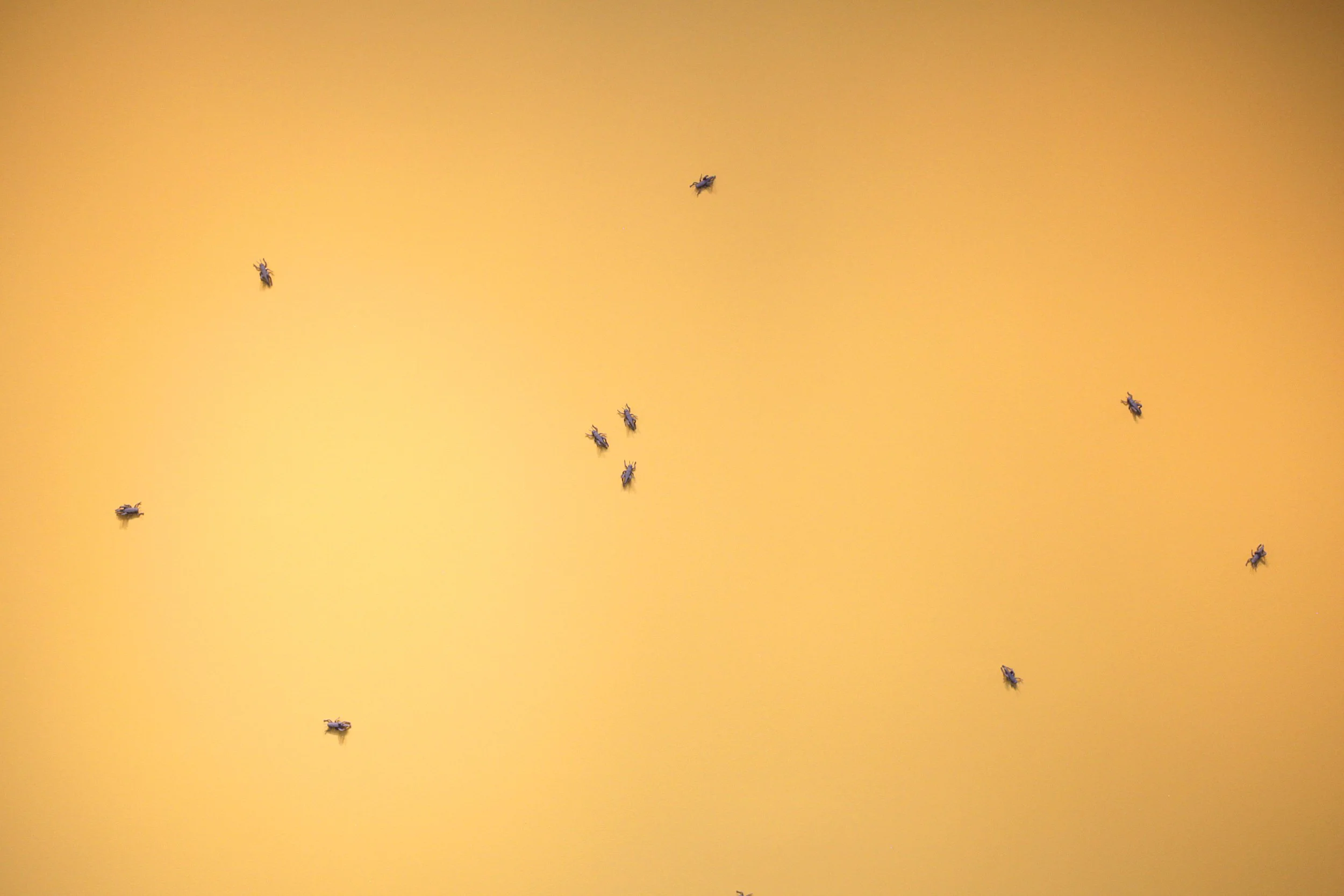
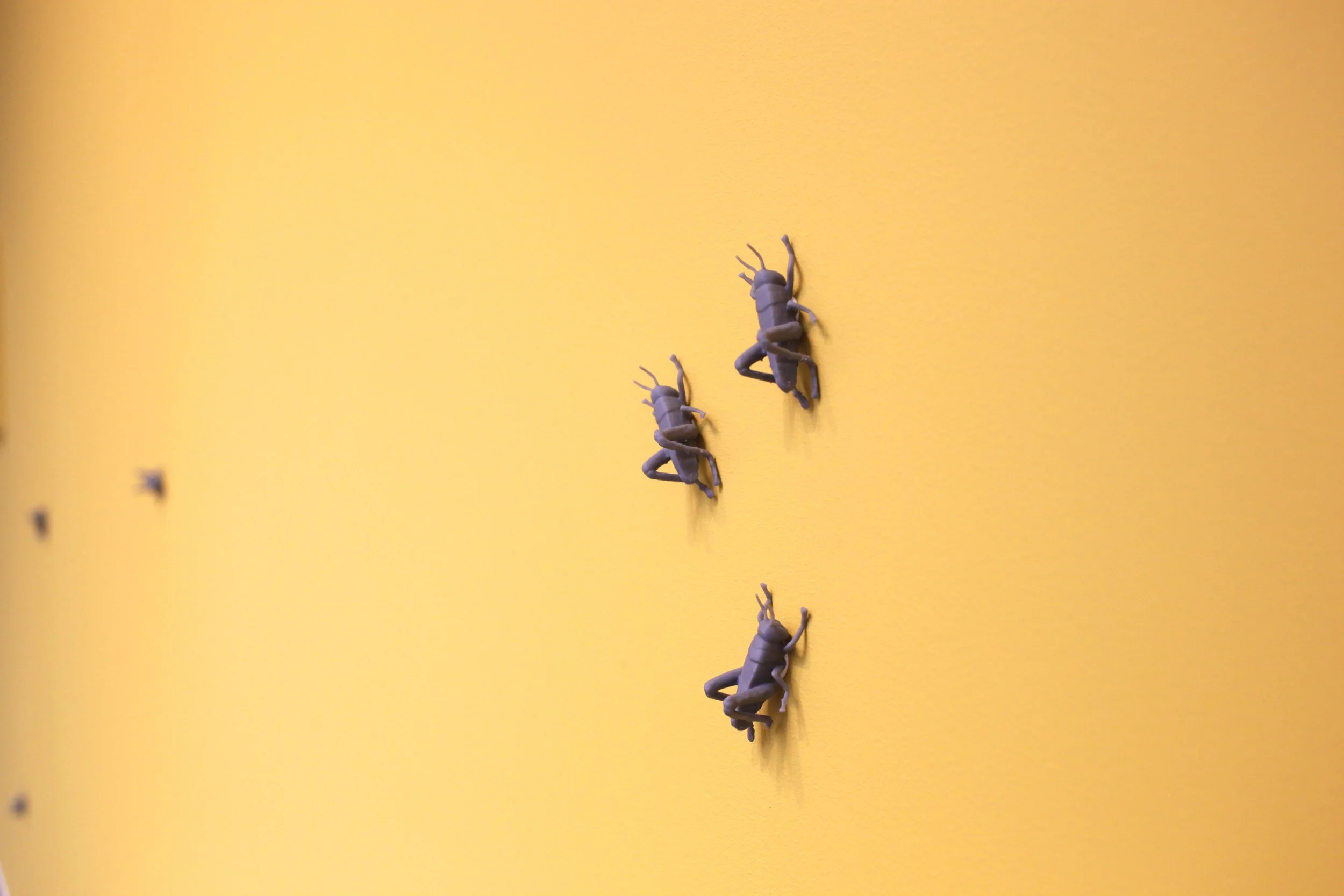
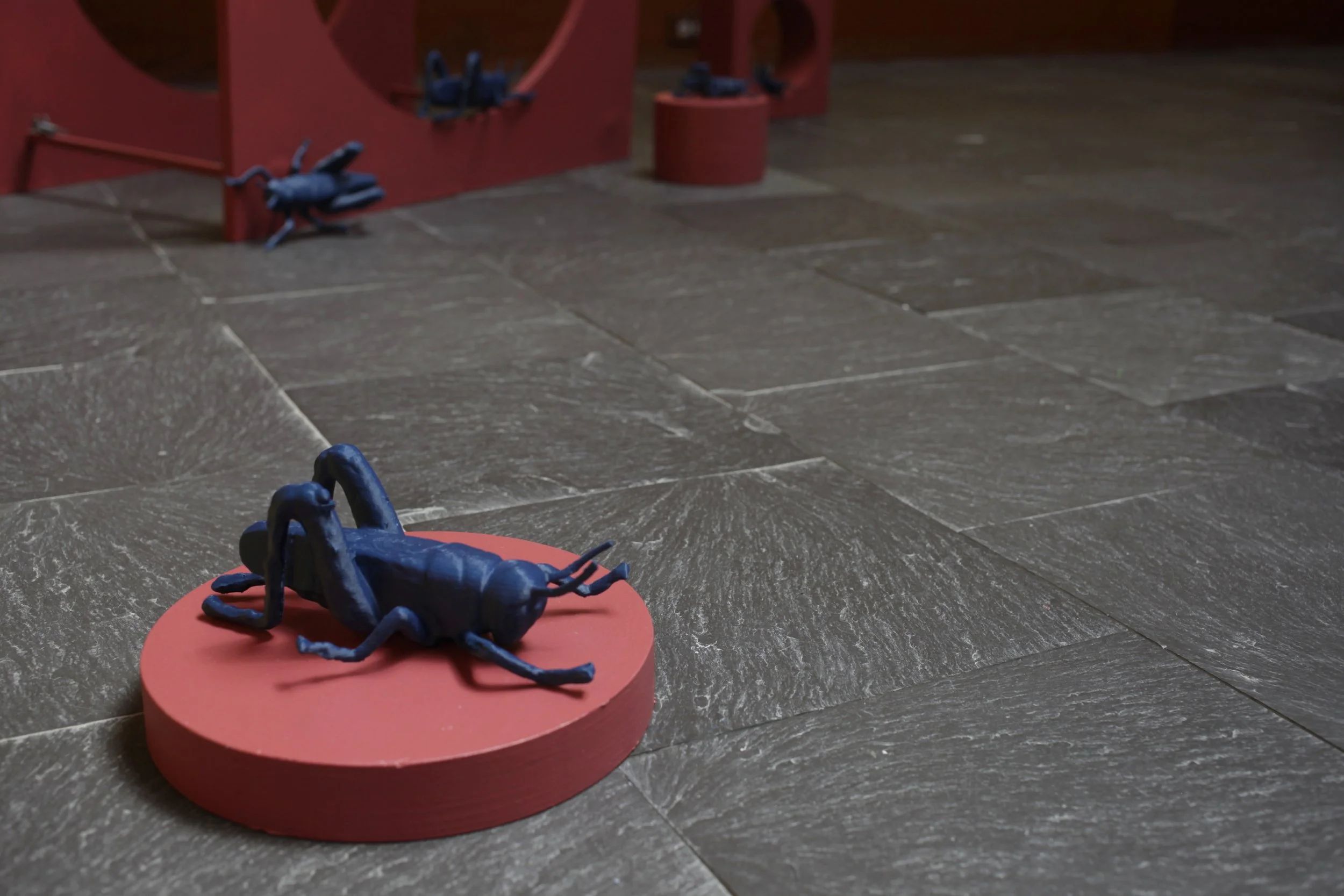
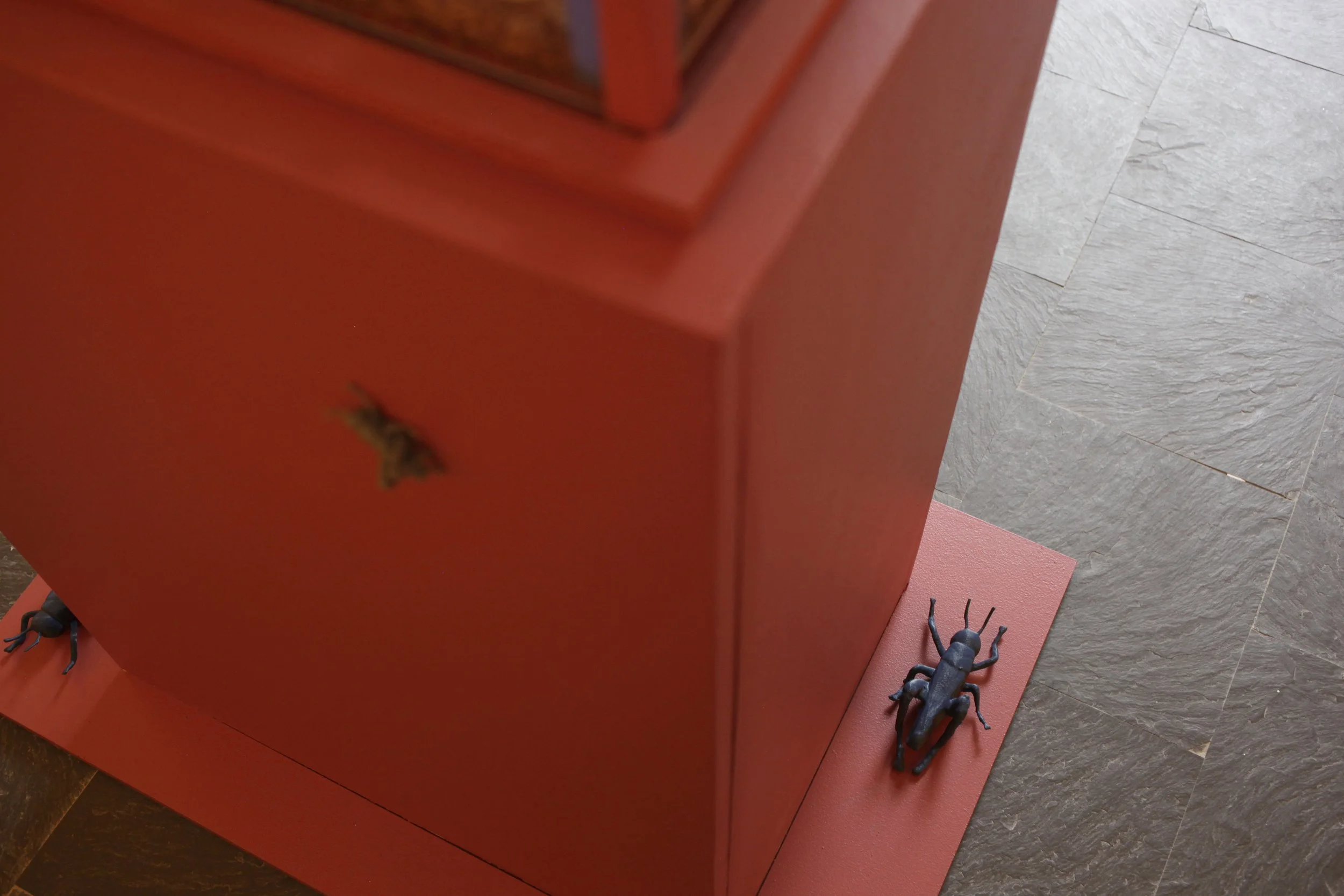
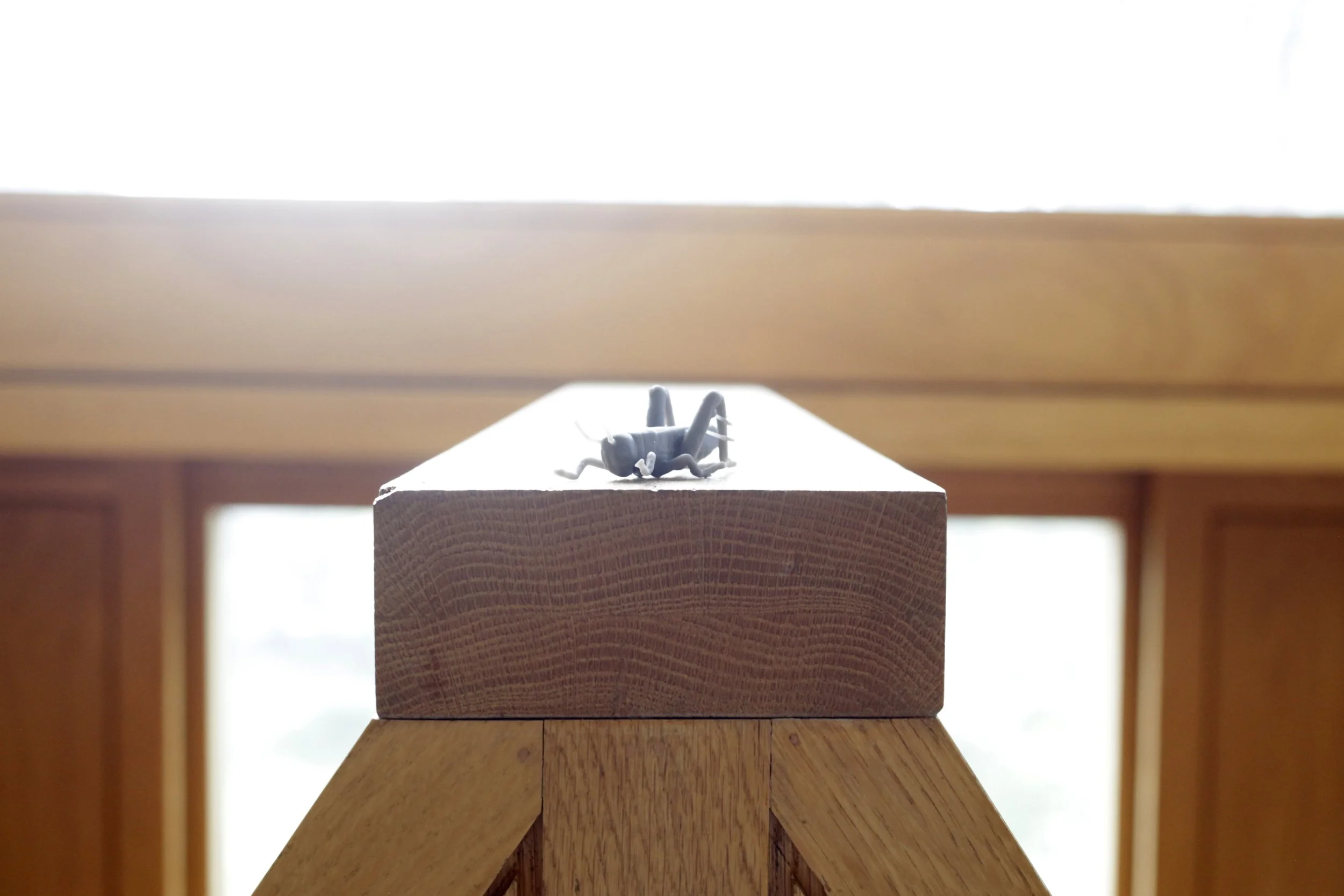
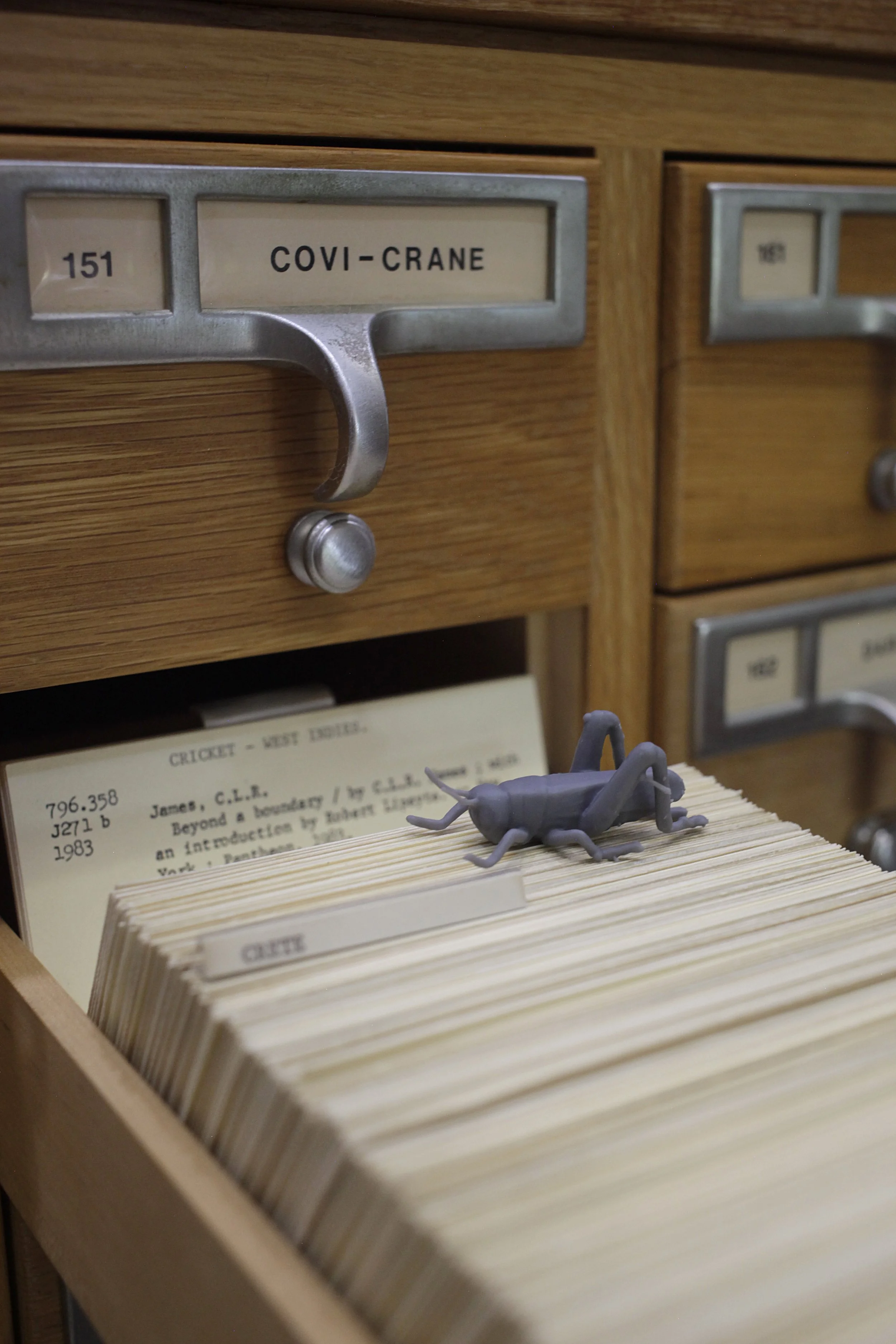
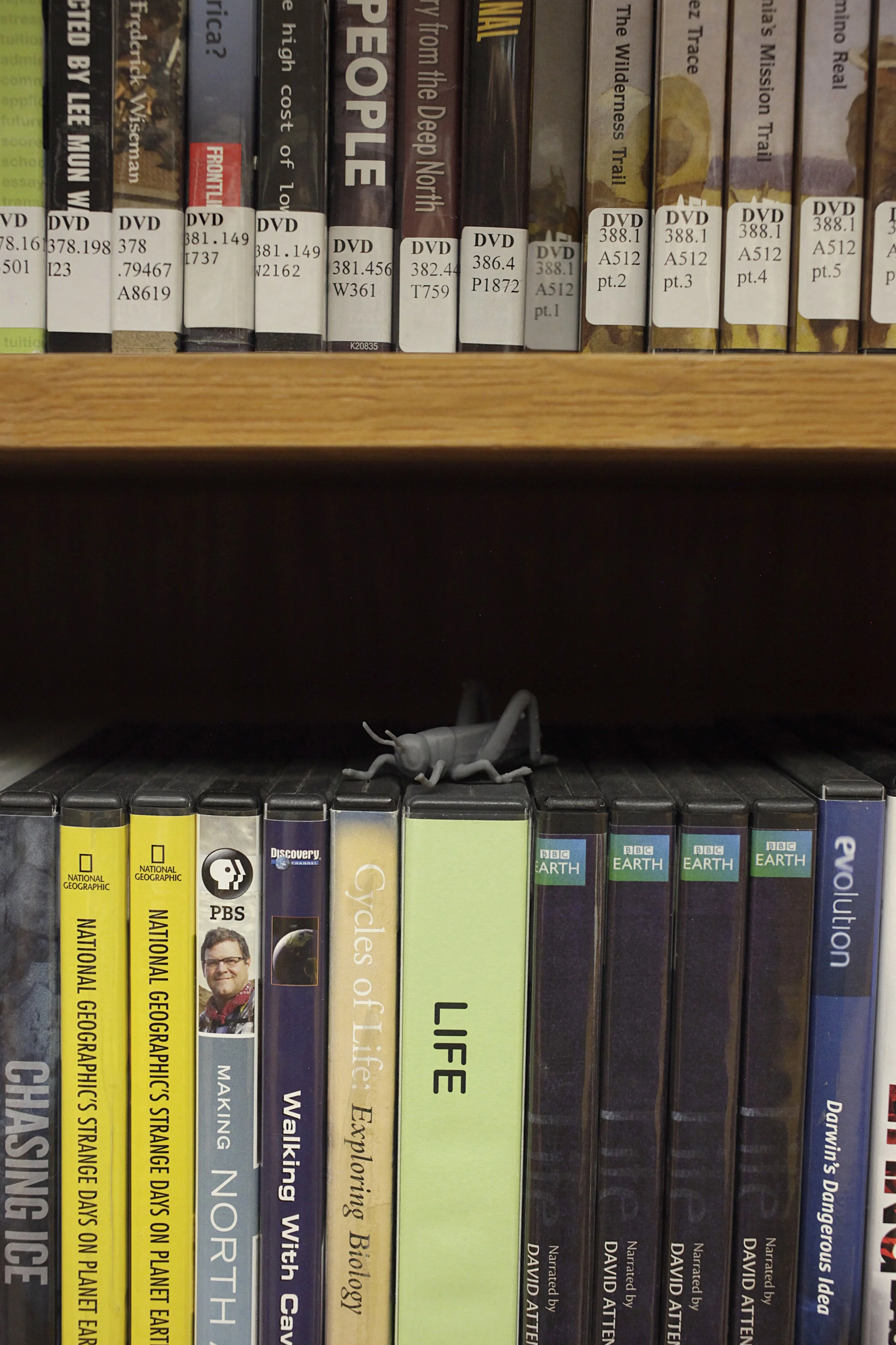
Surrounding the cricket’s enclosure and mini Kahn model, are several 3D printed crickets—produced in a range of scales—that move in and out of the gallery space. Some remain clustered around the library model, while others appear throughout the center of the Lamont Gallery and outdoors on campus. If you look closely while visiting the Class of 1945 Library, you may find a few of these crickets nestled among the shelves or architectural details—an extension of the exhibition and a subtle return to the site of the original prank.
Surrounding the cricket’s enclosure and mini Kahn model are several 3D-printed crickets—produced in a range of scales—that are found around the gallery space. If you look closely while visiting the Class of 1945 Library, you may find a few of these crickets nestled among the shelves or architectural details—an extension of the exhibition and a subtle return to the site of the original prank. The origin of these repeated 3D-printed crickets comes from a small rubber toy cricket (or maybe a grasshopper—depending on your powers of insect-body identification) kindly shared by English Faculty member Erica P. Lazure, whose contribution helped transform a playful moment into the insect representative of this rivalry prank.
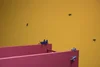
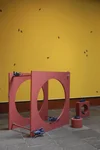
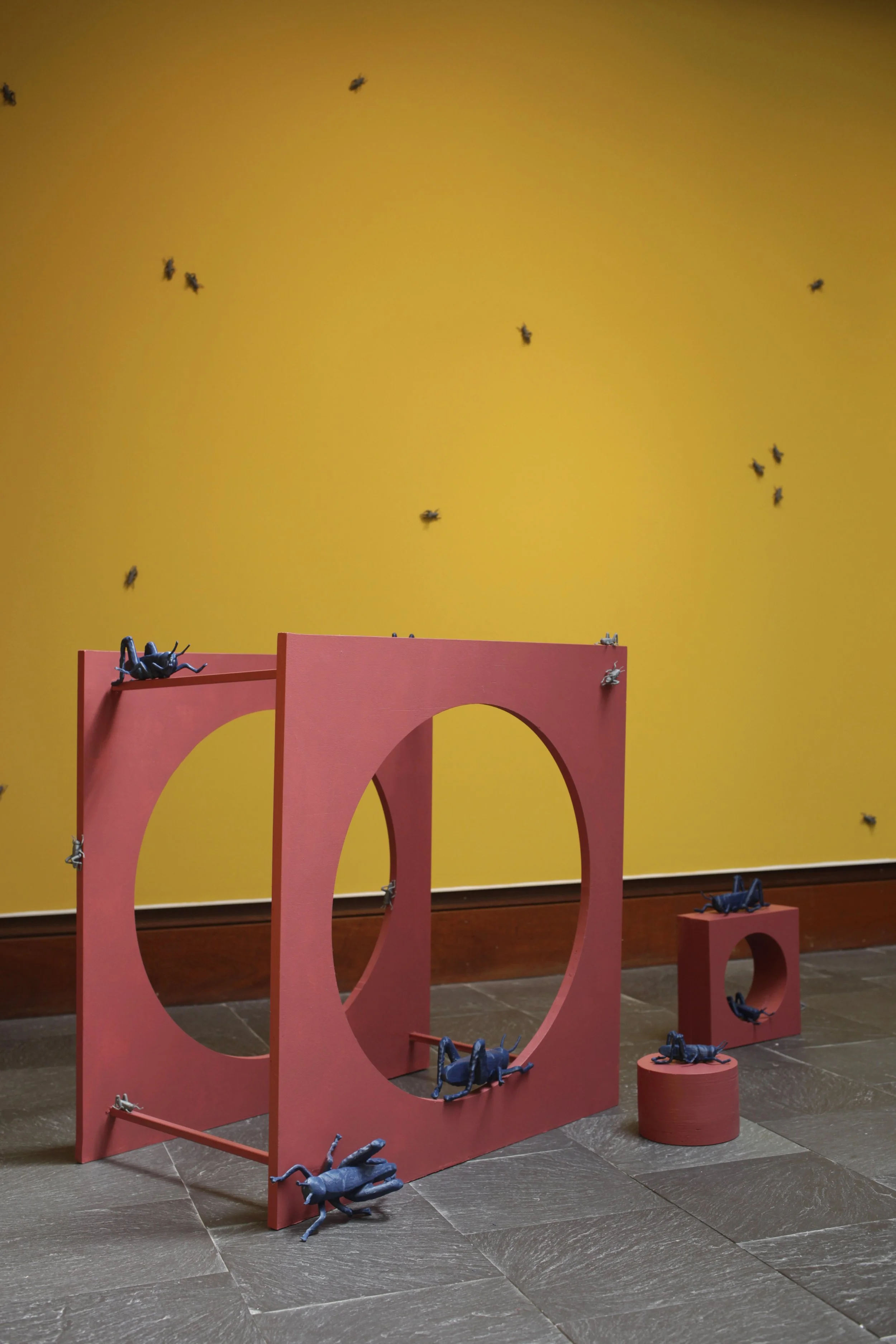
Extending from the central sculpture and model of the library, the exhibition includes a series of CNC-machined sculptures that reference the architecture of Kahn’s building on campus. These structures, made from wood and acrylic, take the form drawn directly from the architectural elements of the library—circular voids, square frames, and layered rectilinear volumes. These elements function both as formal references and as spatial disruptions, turning the gallery into a fragmented model of the building itself. Enlarged crickets presented in colors that reference the rivalry, navigate these shapes, subtly animating the geometry and connecting the original prank to the architectural ideals it momentarily disturbed. Additionally, inspired by an idea from library staff, at 4:00 p.m. each day, the Class of 1945 Library will play a 30-second recording of cricket sounds—a sonic footnote that quietly reinstates the prank into the school’s daily rhythm.
This work considers how architecture is not only inhabited physically, but culturally—how even spaces designed for silence and permanence absorb the rhythms of those who move through them whether it is a person or insect. It asks what traces remain when gestures are informal, unsanctioned, or deliberately fleeting. Through sound, movement, and quiet spatial disruptions—including the subtle presence of crickets—this work invites us to think of memory not as something fixed in record, but as something that clings to thresholds, lingers in atmospheres, and settles into the unnoticed seams of the built environment as a gesture of humor and reminder of the world outside of what we build.
Images: Peter Morse